
12V 22Ah Sealed Lead Acid Battery with F3 Terminals
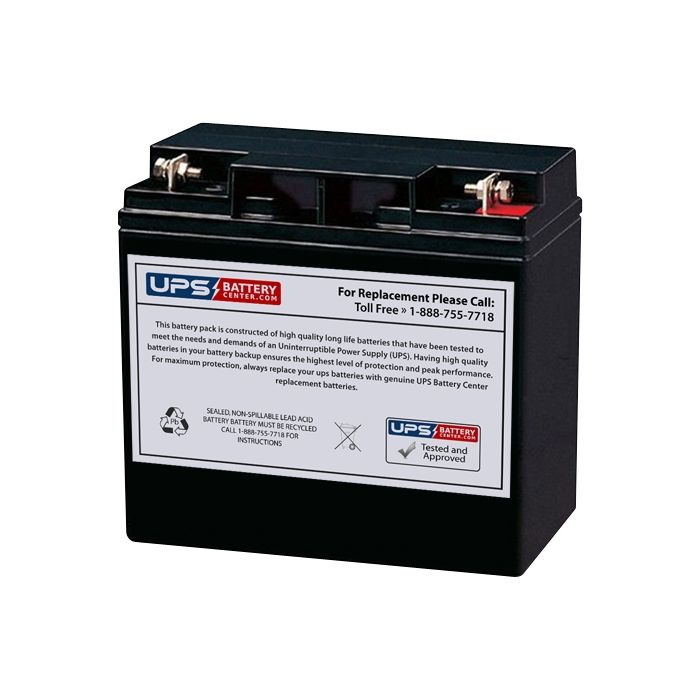
Description / 12V 22Ah Sealed Lead Acid Battery with F3 Terminals
Features of the TLV12220 - 12V 22Ah Sealed Lead Acid Battery with F3 - Nut & Bolt Terminals
• Absorbent Glass Mat (AGM) technology for efficient gas recombination of up to 99% and freedom from electrolyte maintenance or water adding
• Not restricted for air transport-complies with IATA/ICAO Special Provision A67
• UL-recognized component
• Can be mounted in any orientation
• Computer designed lead, calcium tin alloy grid for high power density
• Long service life in float or cyclic applications
• Maintenance-free operation
• Low self discharge
Applications
• UPS Standby Power Applications
• Data Centers
• Emergency 911 Centers
• Hospitals & Medical Applications
• Military Power Equipment
• Emergency Lighting
• Fire Detection and Alarm Devices
Product Specifications
Dimensions
Terminal Type: F3
Length (mm/inch): 181/7.13
Width (mm/inch): 77/3.03
Height (mm/inch): 167/6.57
Total Height (mm/inch): 167/6.57
Approx. Weight (kg/lbs): 6.10/13.4
Performance Characteristics
Cells Per Unit: 6
Voltage Per Unit: 12
Capacity: 22Ah@20hr-rate to 1.75V per cell @25°C
Maximum Discharge Current: 220A (5 sec)
Internal Resistance: Approx. 13mΩ
Operating Temperature Range
Discharge: -20°C~60°C
Charge: 0°C~50°C
Storage: -20°C~60°C
Normal Operating Temperature Range: 25°C±5°C
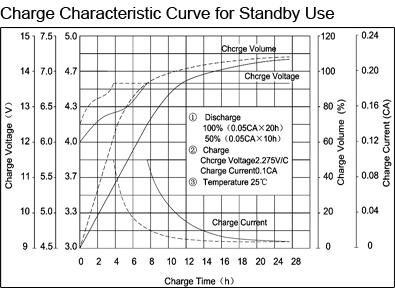
Float Charging Voltage:
13.7 to 13.9 VDC/unit Average at 25°C
Equalization and Cycle Service:
14.6 to 14.8 VDC/unit Average at 25°C
Recommended Maximum Charging Current Limit: 6.6A
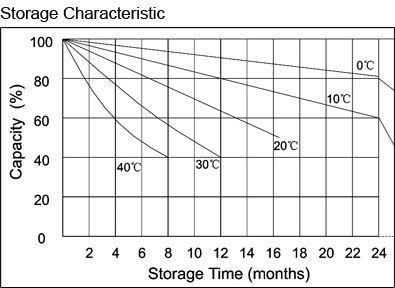
Self Discharge:
Valve Regulated Sealed Lead Acid (VRLA) batteries
can be storedfor more than 6 months at 25°C.
Self-discharge ratio less than 3%per month at 25°C.
Please charge batteries before using.
Always charge batteries after use.
Container Material: A.B.S. UL94-HB, UL94-V0 Optional.


Constant Current Discharge Characteristics
Constant Power Discharge Characteristics
(Note) The above characteristics data are average values obtained within three charge/discharge cycles not the mimimum values.
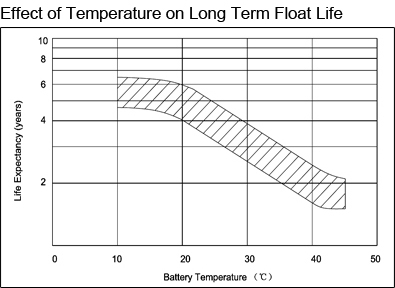

Capacity Factors With Different Temperature